Is Bordeaux 2022 the Vintage of the Century?
Few Bordeaux releases in recent years have been as closely anticipated as the 2022 vintage, which has now fully entered the market. Prestigious French publication La Revue du Vin de France called it a “vintage of the century.” Wine Advocate awarded ten 100-point scores; Wine Spectator named Château Giscours its 2025 Wine of the Year, while James Suckling gave the same title to Château d’Issan. The consensus has been unusually strong.
That momentum was already palpable during the En Primeur campaign in spring 2023, when critics and importers tasted the wines while they were still in barrels. The reds were fragrant and expressive, with aromas of red berries and floral notes, juicy on the palate, with velvety tannins and a bright lift of freshness that balanced the ripe fruit.
Bordeaux wines are typically quite firm in their youth, often requiring several years to fully integrate. Here, however, the wines felt ready after just one winter of aging. Vibrant, fruit-driven, and easy-drinking, they could just as easily be poured by the glass in a cool wine bar in the Marais. After another couple of years, the wines have become slightly more focused and layered, gaining in complexity without losing their energy.
“Extraordinary results—I am convinced this will be one of the most important vintages of the century,” Thomas Duroux, managing director of Château Palmer, told me. Jean-Guillaume Prats, vice president of Domaines Delon (Château Léoville Las Cases, Château Potensac, Château Nénin, and Clos du Marquis), agreed.
“This is one of the greatest vintages of the past 150 years,” he said. “We are convinced that 2022 is a vintage that will be preserved for three to five future generations.”
A Paradoxical Vintage
The context of the 2022 vintage matters. It was shaped in one of the hottest and driest growing seasons in Bordeaux’s history. Under such extreme conditions, one would expect heavy, cooked profiles. Instead, the wines show remarkable vitality. So how did winemakers manage to achieve these results?
One of the key factors was the dry growing season, which largely eliminated disease pressure, leaving berries in excellent sanitary condition across the region. At the same time, the vines adapted to the challenging weather. The cooler 2021 vintage had given vineyards a chance to recover, and when high temperatures set in as early as May 2022 and intensified over the season, the vines were able to acclimate to the heat. Reduced vegetative growth limited water loss through transpiration, while smaller berries with thicker skins placed more moderate demands on the plant.
Old vines proved particularly resilient: their extensive root systems allowed them to draw water from deep within the soil. Younger vines, by contrast, often struggled under the combined pressure of heat and drought—Château Margaux, for example, lost 35% of its crop as a result.
“The only option for the vine was to send its roots as deep as possible in search of nutrients. It’s a reminder that the vine is a Mediterranean plant, naturally adapted to drought,” Emeric de Gironde, president of Château Troplong Mondot (Saint-Émilion), told me during a tasting. “Honestly, when I returned from vacation in August, I expected to find very small berries and exhausted vines—but quite the opposite. The vineyards were green and in excellent condition.”
Resilience in the Vineyard
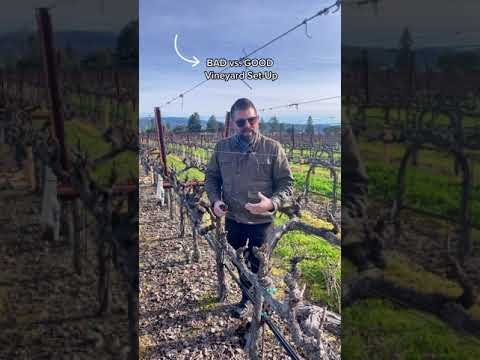
Progressive viticultural practices also contributed to the outcome. Soils richer in organic matter and protected by cover crops were better able to retain moisture and stay cooler, helping vines make it to the finish line. At Phélan Ségur (Saint-Estèphe), teams pointed to the presence of grass between the rows as a decisive factor, while at Château Figeac (Saint-Émilion), the benefits of a broader ecosystem were emphasized: a grove of trees and a nearby lake helped create an optimal microclimate around the vineyards.
“We have been working seriously on our soils for 15 years—preparing them in winter and spring so they can retain moisture efficiently and allow the vines to send their roots as deep as possible. Thanks to the resilience of our vines in the 2022 vintage, we achieved tension and power, along with vibrant acidity,” said Omri Ram, winemaker at Lafleur (Pomerol). “Many people feared the wines would lack freshness, and then were surprised to find it at the tasting. We were not surprised at all. Rainfall during flowering, taken out of context, means nothing. You have to look at the full picture. Our vines are true athletes.”
Experience from previous hot vintages has also taught winemakers to pinpoint optimal harvest dates for individual plots. Increasingly, estates are working with fermentation vessels of varying sizes, allowing parcels to be vinified separately rather than forcing compromises—picking some fruit too early and others too late—simply to fill a large tank. In 2022, the harvest stretched over the course of a full month, making it possible to vinify many plots at optimal ripeness.
Shift in the Cellar
Success also depended on thoughtful vinification choices. One of the dominant trends in Bordeaux today is a move away from heavy, weighty cuvées (that require years of cellar aging before release) toward more elegant styles meant to be enjoyed at an earlier stage. Aggressive, highly extractive winemaking is increasingly falling out of favor, and a growing number of forward-thinking bordelais are unafraid to work with whole clusters to enhance freshness and moderate alcohol levels. Gentle extraction proved especially important in 2022, a vintage that delivered small, highly concentrated berries. As for aging, the proportion of new oak is being reduced, with wines more frequently raised in foudres and concrete vats.
“I want to make wines that can be enjoyed as soon as possible, two to three years after the harvest,” said Guillaume Pouthier of Les Carmes Haut-Brion, noting that he applies all of these approaches in his winemaking.
His philosophy is shared by Christian Moueix, president of Établissements Jean-Pierre Moueix (La Fleur-Pétrus, Trotanoy, Bélair-Monange): “We harvest when the berries reach ideal ripeness, or even slightly earlier. Ten years ago, we picked a bit overripe, and those vintages lacked freshness. During fermentation, instead of breaking up the cap, we gently wet it. The tannins have become softer—ten years ago the wines were aggressive in their early stages, whereas today they are charming.”
Taken together, Bordeaux’s identity is evolving—shifting away from heavier, fireside-style reds toward finesse and subtlety. The 2022 vintage is a vivid expression of that change. It comes as a breath of fresh air for a region that has faced headwinds in recent years, from uneven harvests and tariff pressures to a broader softening of interest in Bordeaux wines.
There is little reason to hesitate when it comes to Bordeaux 2022—the likelihood of a positive experience is high. Many wines also show solid aging potential, making them a compelling addition to a cellar.
“In my lifetime, I’ve seen 52 vintages, and 2022 is certainly among the top five,” said Moueix. “Is it the best? Who knows? We always hope the best is still to come.”
More Red Wine Coverage
From the Shop
Find Your Wine a Home
Our selection of red wine glasses is the best way to enjoy the wine’s subtle aromas and bright flavors.
Published: January 30, 2026