Poaching Coaches – NFL Style Winery Moves
Now that the Superbowl is history (and what a great Superbowl it was!) the coach poaching season is in full swing. The teams with the best coaches and best records get scoured annually as assistant coaches and position coaches look to move on and move up. The Seahawks lost their brilliant offensive coordinator after just one year. He took a head coaching position and promptly poached our quarterback coach to become his O.C. Meanwhile we just poached a longtime San Francisco assistant to become our next O.C. And now the Seahawks are for sale. So on it goes.
I see parallels in wine. Many of the largest wine companies in California, including Gallo, Trinchero, Treasury, Constellation and Foley Family, have been aggressively off-loading properties, down-sizing tasting rooms and putting up vineyards and production facilities for sale. Here in the Pacific Northwest, according to new statistics from the Wine Analytics Report, the number of wineries peaked in 2023, since down 3% in Oregon and 6% in Washington. Direct to consumer shipments are also in decline. Particularly concerning is a steep drop in case sales of Washington Cabernet Sauvignon.
Despite the gloomy trends, the report notes that “the supply side of the wine business is returning to balance given the amount of vineyard acreage already pulled, expected removals this year and anticipated market demand.”
How does this relate to the Northwest wine industry? Consider that Washington has eight wineries making 500,000 cases or more; Oregon has none. It’s the biggest wineries that are seeing the biggest reductions. Small wineries are either going to adjust or close, with little impact on overall regional statistics. We’re seeing key people moving on; maybe or maybe not getting poached, but the outcome is the same.
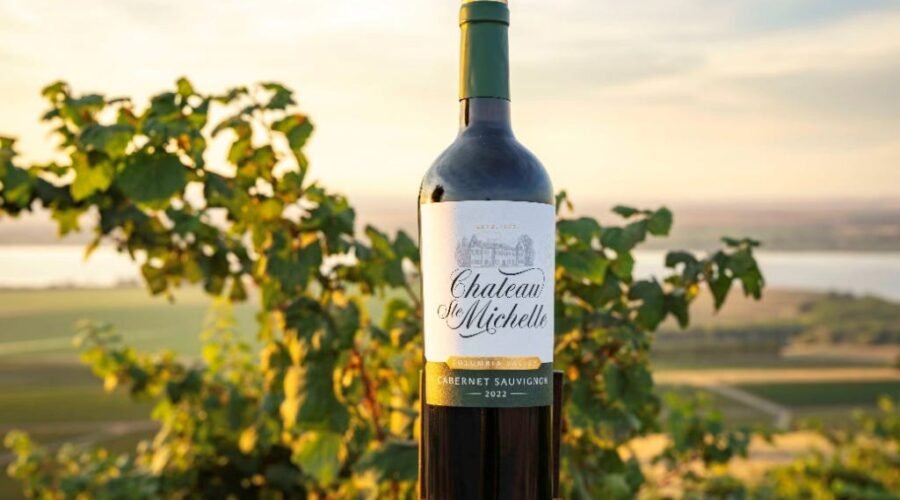
It sometimes happens when someone in a management position hits a ceiling, often in a family-owned business rather than a larger corporate structure. Or when a business once within a corporate structure is returned to private ownership. The recent sale of Ste. Michelle Wine Estates by a distant (and disinterested) investment group to a local farm family has set a lot of wheels in motion.
Prior to the sale there was already turmoil at the top, with short-term CEOs in a revolving door administration, ongoing sales of premier properties and massive reductions in grape contracts. There has been general agreement that the sale of the winery, the brands, the iconic Woodinville headquarters and the estate vineyards to the Wyckoff family bodes well for the future – local owners, committed growers, experienced wine producers. One missing link was distribution, and that is now being addressed by the announcement that an organization known as The Miller Collections has been contracted as a national marketing agency.
“Wineries hire us to build volume, the business, and brand value with smaller, mid-sized and emerging accounts,” says Craig Miller, TMC President. “We have the efficiency and scale to work with hundreds of accounts typically underserved because the overall on-premise national accounts channel is vast. We are an ideal partner for the small to medium-sized winery that needs a national sales force without building one in-house.”
It’s worth noting that Lou Constant, TMC’s Executive Vice President Sales, most recently served as Ste. Michelle’s VP of On Premise, where he led a national accounts sales team. Among TMC’s partners is the Wildwood Spirits Company, where Joe Aschbacher, another long time SMWE sales rep, is VP of Sales.
“I spent 21 years with Ste. Michelle Wine Estates,” Aschbacher wrote me in an email, “and I am now managing sales and a partner with John Howie and Erik Liedholm at Wildwood Spirits Co. here in Seattle. We are expanding our presence across the country, and The Miller Collections is representing us in Regional and National On-Premise accounts. The Miller Collections team will work closely with the Ste. Michelle Wine Estates National Accounts On-Premise team to forge new business in select national and regional accounts. The Miller Collections team has over 50 years of experience working for Ste. Michelle, which adds credibility and expertise to its representation of this great portfolio of wines from Washington State.”
On Chateau Ste. Michelle’s winemaking side, Katie Nelson remains the Vice President of Winemaking. Brian Mackey made the red wines up through the 2024 vintage. Beginning in 2025 Joel Wright, who previously worked with David Merfeld at Northstar, took over as red winemaker. David Rosenthal was the white winemaker through the 2022 vintage. Beginning in 2023 Taylor Butterfield took over that role. So the reviews published below, while current releases, do not all reflect these changes.
At the Chateau a new administrative team was announced last month. David Bowman has been appointed Chief Executive Officer. He joined Ste. Michelle in 2021 as CEO of its California properties before becoming Chief Commercial Officer in 2023. His prior experience includes executive roles at Jackson Family Wines, The Wonderful Company, The Wine Group, and E. & J. Gallo Winery. Anna Mosier, who joined the winery in 2024, is the new President and Chief Financial Officer. Previously, she served as President of House of Smith and worked in a variety of financial and operations roles at E. & J. Gallo Winery and Proctor & Gamble.
This means that experienced sales and marketing people, many with strong backgrounds in Washington wine, will be working with the Wyckoffs to rebuild and re-orient their new acquisition. As noted above, current big picture wine market trends are beginning to suggest the start of an industry-wide turnaround by next year, but with significant changes. Red wines are trending down, white wines trending up. Inexpensive supermarket brands are struggling, as are mid-priced wines, but wineries with very expensive, limited production, cultish wines are succeeding.
SMWE Senior Director, Communications & Corporate Affairs Lynda Eller promises a deeper commitment to “boutique winemaking practices at scale, increased investments in small French barrel fermentation and oak aging, and a refined focus on the region’s top vineyard sites… with distinctive small lot releases and single-site bottlings from the winery’s estate vineyards of Cold Creek and Canoe Ridge Estate.”
Part of this “brand renaissance” is an updated label for Chateau Ste. Michelle. Still undecided are plans for the two Walla Walla wineries – Northstar and Spring Valley – both with estate vineyards and distinctive and distinguished track records. Later this spring Chateau Ste. Michelle will debut two new additions to its portfolio – a Columbia Valley Red Blend ($17) and an Evergreen Vineyard Riesling ($29).
To wrap things up on a positive note (or notes) – the much-loved summer concert series at the Woodinville Chateau will be continuing. As of now the website’s Concert Calendar lists shows for Yellowcard (May 24) and Sarah McLachlan (August 8 & 9) while promising more to come.
It’s been more than a decade since I had the opportunity to taste and review any wines from the SMWE portfolio, so I was pleased to receive a good cross-section of some of their best upcoming releases. Those reviews follow below.
Chateau Ste. Michelle
Chateau Ste. Michelle & Dr. Loosen 2024 Eroica Riesling – This 25-year collaboration has long been the cornerstone setting a standard for Washington Riesling. Full-bodied, loaded with tree fruits, lightly off-dry and perfectly balanced, it’s an all-purpose, can’t miss bottle year in and year out. 13704 cases; 11%; $20 (Columbia Valley) 90/100
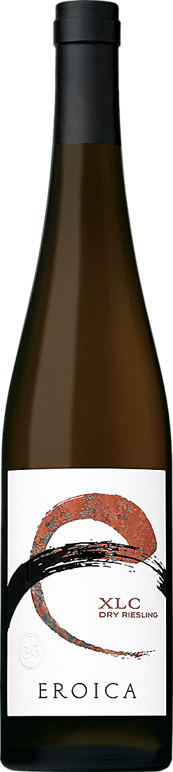
Chateau Ste. Michelle & Dr. Loosen 2021 Eroica XLC Dry Riesling – Evergreen vineyard grapes were fermented in oak uprights with native yeast, then aged on the lees for 19 months. A strikingly different style than the dry Rieslings I remember from years gone by, this has depth and texture, spicy details and a tight, tart, coiled grapefruit core. It’s dry, leesy, creamy and long, with notes of honeysuckle, beeswax, orange marmalade and candied lemon. 500 cases; 12.5%; $45 (Ancient Lakes) 95/100
Chateau Ste. Michelle 2023 Chenin Blanc – A limited production wine, from undisclosed vineyards, two thirds stainless steel fermented, some aged sur lie in neutral barrels. It’s a well-rounded wine, without the racy minerality of, say, Loire Valley Chenins, but as a smooth, fruity, accessible white it’s a winner. 1710 cases; 13%; $30 (Columbia Valley) 91/100
Chateau Ste. Michelle 2023 Canoe Ridge Estate Chardonnay – Chardonnay is a strength at this vineyard, and this well-priced wine offers all the goodies – crisp citrus and apple fruit framed with lightly buttery caramel accents. Not too much new oak – just enough to put a touch of toast on the finish. A very fine, any time Chardonnay that outperforms many of Washington’s more expensive examples. 400 cases; 13.5%; $23 (Horse Heaven Hills) 93/100
Chateau Ste. Michelle 2022 Canoe Ridge Estate Cabernet Sauvignon – This AVA is home to some of Washington’s biggest vineyards, and itself has a wide variety of aspects and elevations, so it’s all but impossible to put an imprint on the wines. This is broad, open, lightly savory and balanced. With ample aeration more depth and tannic muscle comes out. Drink now or cellar for a few years. 1474 cases; 14.5%; $35 (Horse Heaven Hills) 92/100
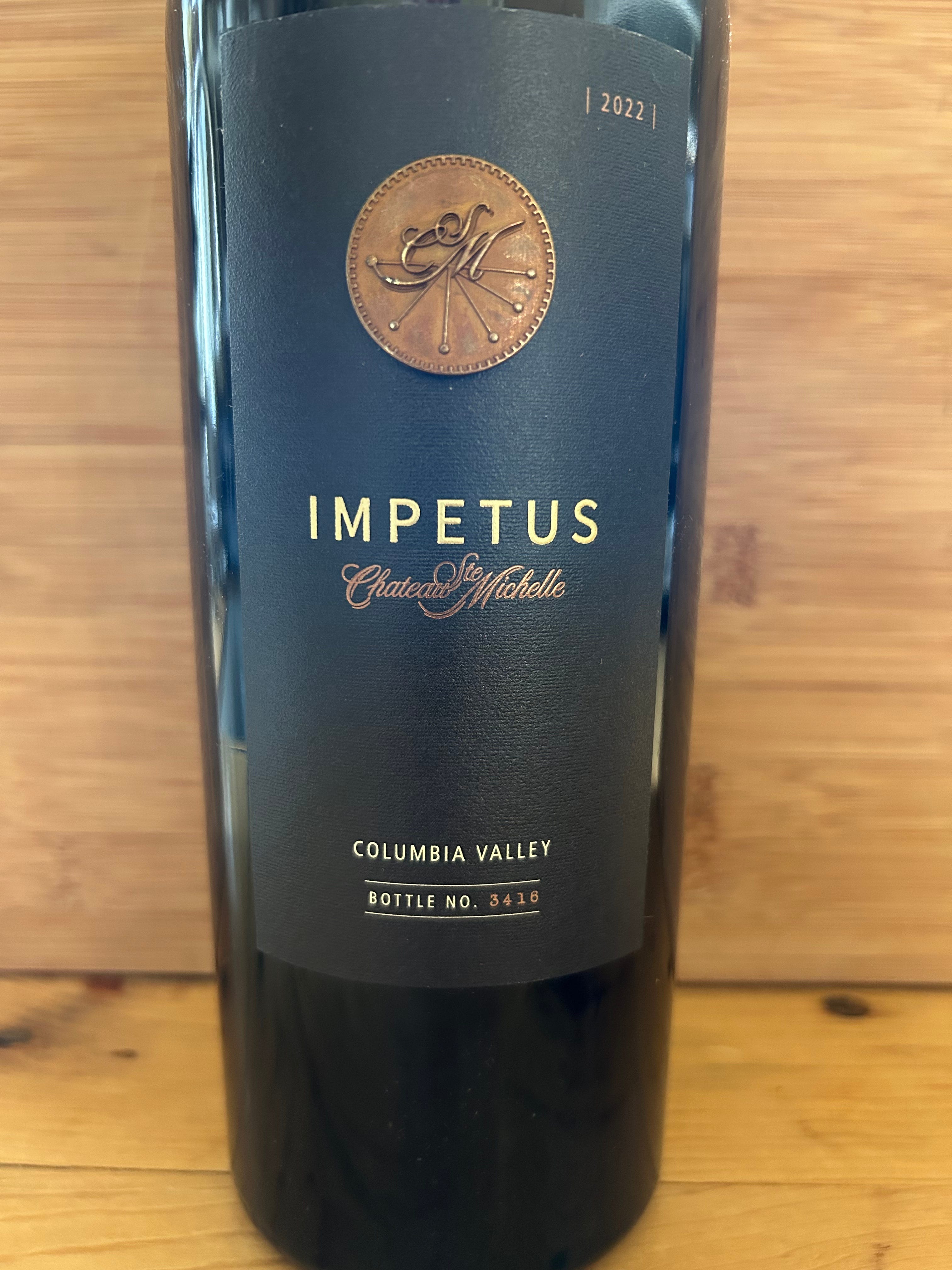
Chateau Ste. Michelle 2022 Impetus Red – This wine, displayed in one of the most massively heavy bottles I’ve ever seen, is three quarters Cabernet Sauvignon, one quarter split between Syrah and Malbec. 2013 was the first vintage, created as part of the winery’s 50th Anniversary celebrations in 2017. Designed to showcase three varietals not traditionally seen together in blends, half the grapes in this new release are from the Cold Creek vineyard, long a standout that produced exceptional single vineyard Cabernets for decades. One third are from Canoe Ridge, and the rest from Walla Walla. The blend is broad and open, the fruit a mix of blue and black berries with a dash of chocolate. Tasted on the second and third day it held up evenly. 390 cases; 14.8%; $125 (Columbia Valley) 91/100
Northstar
Northstar 2022 Merlot – As with Riesling, multiple Ste. Michelle brands have championed Merlot, most specifically at Northstar. This blends grapes from all over the Columbia Valley: Shaw Red Mountain, Stone Tree, Four Feathers, Heart of the Hill, Cold Creek, and Anna Marie vineyards. One sixth of the blend is Cabernet Sauvignon and one third of the barrels were new. Winemaker David ‘Merf’ Merfeld has been doing this so long he qualifies as a one-man institution, and as with the best Ste. Michelle projects this wine sets a standard for the state. It’s firm, compact, fully ripened with a mix of raspberry and cherry, plum and currant fruit. The tannins are ripe and polished, the finish smooth and supple. A winner all around. 4997 cases; 14.5%; $45 (Columbia Valley) 94/100
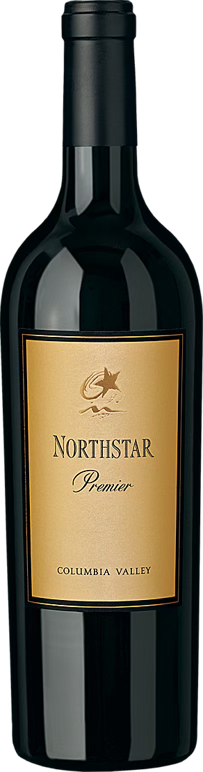
Northstar 2022 Premier Merlot – This high end cuvée gets 20 months in 38% new French oak. Sourced from Red Mountain’s Heart of the Hill vineyard, another 19% is Dionysus vineyard Cabernet Sauvignon. As good as the 2022 Merlot is, this Premier is a notch better; more power, more density, more purity, more dark fruits. The barrel aging frames it beautifully in toasty highlights; as it lingers through a long finish walnuts and coffee grounds, black tea and smoke accents emerge. 299 cases; 14.5%; $100 (Columbia Valley) 95/100
Spring Valley
These 2022s are part of the last vintage made by long time Spring Valley winemaker Serge Laville, now at Reali.
Spring Valley 2022 Frederick Red Wine – A Cab/Merlot blend from the estate vineyard which is uniquely sited 12 miles northeast of Walla Walla. This is drinking well with enough bottle age to begin to smooth it out and open up the aromatics. Sandalwood, cherry pipe tobacco, blackberry fruit and bourbon tea are in the first whiff and follow along on the palate. Smooth and balanced, it’s built for comfort not for speed. Given my experience with past vintages of Frederick I’d expect this to evolve further and drink well over another 10 to 15 years. 1890 cases; 14.5%; $60 (Walla Walla Valley) 93/100
Spring Valley 2022 Uriah Red Wine – Half and half Cab Franc and Merlot, Uriah is often the best of any Spring Valley vintage. It may be that these varietals are best suited for this unique site, in the tiny Spring Valley between Walla Walla and Waitsburg; an estate which could well be its own sub-AVA. Surrounded by wheat fields these wines have always carried a scent and flavor of dryland wheat rather than the usual savory herbs. Smooth, supple and bringing a balance of blue and black fruits, this lovely wine has texture, depth and length, yet retains its ‘drink now’ accessibility. 3900 cases; 14.5%; $60 (Walla Walla Valley) 95/100
How I Organize My Tastings: I appreciate the chance to taste and discuss wines with winemakers when I am visiting wineries, but all tastings for published reviews and scores take place at my home under tightly controlled conditions. I open no more than a half dozen wines at a time and often retaste them repeatedly over 24 – 48 hours. I use specific stemware and eliminate all distractions such as cooking smells, food, music and media. My focus is exclusively on the wines, which almost always are newly-released. I believe it’s far more important to know their context and history than to put a brown paper bag over them so I can boast that I’m objective, whatever that means. What I have to offer are informed opinions based on four decades as a published wine reviewer. You may agree or disagree, but you’ll always know what I think. Put my notes in a pile labeled ‘Wines Tasted With Context’ and put the rest in a pile labeled ‘Wines Tasted In A Brown Paper Bag’. I leave it to you to choose which reviews you find more valuable.