Enough of the Corruption and Bribery by Wine & Spirit Wholesalers
Corruption in the wine and spirits world tends to come from one source: Wholesalers.
-
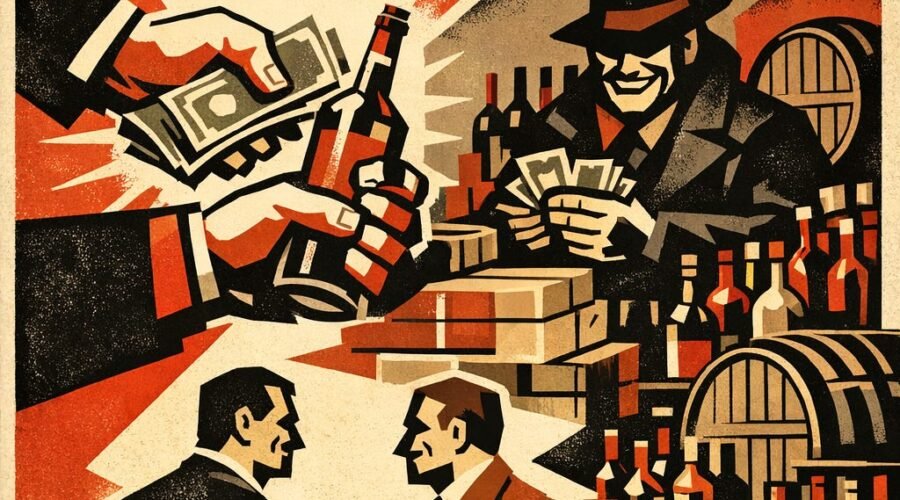
Executives at Southern-Glazeres, the largest wine and spirits wholesaler in America, have been indicted by the feds for bribery, assuring the products they represent receive greater shelf space than those products they don’t sell.
-
The most important Michigan lawmaker dealing with alcohol issues was given thousands of dollars in airfare and luxury hotel accommodations in Turks and Caicos by the state’s powerful wine and spirits wholesaler trade association.
-
Southern Glazers is being sued by the Federal Trade Commission for giving discounts to large retailers while denying those same discounts to small retailers.
-
Southern-Glazers and Republic National were sued by Provi (and eventually settled) for conspiring to boycott the Provi sales platform and threatening retailers who used the platform, forcing them back to the wholesalers’ own proprietary (and less competitive) ordering systems.
Here’s a modest proposal: because wine and spirits wholesalers (particularly the largest among them) and their trade associations can’t be trusted to play fairly—despite being given a monopoly on sales to retailers in nearly every state—lawmakers ought to do away with the Three-Tier System that gives wholesalers the exclusive right to distribute wine and spirits.
It’s not enough that the law requires all wine and spirits to flow through a shrinking set of huge middlemen before they get to retailers. No. Those same coddled middlemen feel the need to bribe the largest retailers and the lawmakers who already do the wholesalers’ bidding.
It’s not enough in an age of digital commerce that 90+% of wine and spirits flow through the wholesalers and their archaic Three-Tier System. No. The wholesalers have to spend millions of dollars opposing the simple idea that wineries, brewers, distillers, and retailers ought to have the right to ship directly to consumers.
It’s not enough that wholesalers control which brands appear on a state’s retail shelves. No. They regularly lobby against small, craft producers selling small amounts of product directly to small restaurants, bars, and retailers.
It’s not enough that the largest wine and spirit wholesalers and their trade associations already control the legislative agenda in nearly every state. No. These wholesalers and their representatives have to spend over $50,000,000 on campaign contributions between 2021 and 2024 to the lawmakers who already provide them with a distribution monopoly.
It’s not enough that the largest wholesalers control a majority of brands. No. Many of these same wholesalers began incentivizing the sale of the largest brands by taking away salespeople’s commissions and replacing them with “pay for performance” compensation that nearly required the salesperson to push the biggest brands over the smallest brands.
A combination of hubris and nearly a century of the Three-tier System has nearly guaranteed that the nation’s largest wine and spirit wholesalers will carry out corrupt actions. When you are given near-complete control over a state’s alcohol marketplace, you tend to translate that unearned privilege into entitlement.
Setting aside the bribery and corruption at the wholesale level we are now and have long witnessed, these same wholesalers control so much of the distribution of wine and spirits in the United States that their leverage over the retail tier makes them more dangerous than the pre-Prohibition brewers that invented the “Tied House” that eventually led to Prohibition.
The Impact Databank Report from M. Shanken shows that just Southern-Glazers and Republic National control over 50% of the wine and spirits distribution in the U.S. The top ten wholesalers control over 80% of the marketplace. Moreover, Southern-Glazers alone represent more than 1,700 wine and spirits suppliers that include more than 7,000 brands.
What does this kind of consolidation and concentration allow? If you have worked in the alcohol industry for any amount of time, you will hear over and over that retailers are forced to buy copious amounts of one product in order to have access to the actual brands they want.
No one believes that the kind of corruption and bribery outlined in the indictment against the Southern-Glazers executives in California is anything other than the tip of the iceberg. No one.
Now consider this: across the country, wholesalers and their proxies have argued in front of numerous federal courts that their ancient monopoly on the distribution via the three-tier system cannot survive small, specialty wine retailers shipping wine to consumers over state lines. They argue that taxes won’t be paid if retailer wine shipping is allowed. They argue that counterfeit wines will flood the market if consumers can buy from out-of-state retailers. They argue that the health and safety of a state’s residents will be woefully harmed if consumers can receive a shipment of wine from an out-of-state retailer. You don’t make this kind of absurd argument unless you feel so insulated from reality and competition by a system that only protects you and harms everyone else…including consumers.
Now get this. A lawsuit was filed in California a few years ago because, in that state, a winery can sell directly to a retailer in the state and not use a wholesaler, while out-of-state wineries are banned from doing the same. Wholesalers defended this kind of discrimination, saying it was necessary for the health and safety of Californians. Though the case was dismissed on a technicality, the judge hearing the case said the out-of-state winery was likely to win.
Another lawsuit was recently filed that is nearly identical. What can you expect? You can expect California wholesalers again to wiggle their way into the case and try to argue that Californians’ health and safety will be harmed if this is allowed.
But here is the fact: The only way to reduce the corruption that regularly emanates from the wholesalers is to remove the monopoly on distribution they enjoy, exactly as this new lawsuit envisions. Even with the enormous concentration within the middle tier of the alcohol distribution system, removing their monopoly on distribution would give producers and retailers a modicum of relief from the wholesaler boot that presses down on their necks. Producers could at least threaten to go direct if margins are not reduced. Retailers could at least threaten to buy direct if they are commanded to buy a bunch of this to get a little of that.
-
-The largest wholesalers can’t be trusted to follow the law.
-
-The largest wholesalers distort the alcohol industry through bribery and corruption
-
-The largest wholesalers spend millions to keep retailers and producers under their thumb.
-
-The largest wholesalers have no interest in selling small brands while controlling them.
-
-The largest wholesalers will spend whatever it takes to diminish consumer access to the most vibrant, small, craft producers’ products.
This all points to one solution: Break up the largest wholesalers and dismantle the three-tier system. And every single honest person working in the alcohol beverage industry knows this prescription is necessary. Whether or not they admit it depends entirely on whether they make a living from wholesalers’ largess.
By Tom Wark
Tom Wark is the publisher of Fermentation, a source of commentary on the wine business that he has written since 2004. He is also the publisher of THE SPILL, a free, daily newsletter that curates the best wine content on the web.