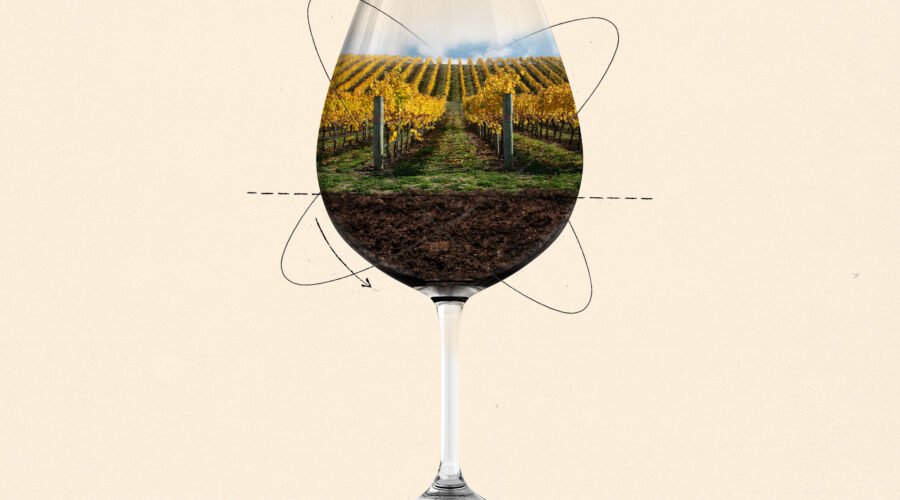
Can Organic and Biodynamic Farming Improve Yields?
Doing the right thing in the vineyard is often seen as a compromise. Chemical-free farming means a lower carbon footprint and cleaner water and soils, but it also requires more hands-on work in the vineyard, and, conventional wisdom goes, lower yields. In other words, organic and biodynamic farming is economically costly.
But is that really true?
As our climate becomes increasingly unpredictable with more frequent and longer-lasting extreme weather events, as well as day-to-day temperature changes exceeding the 90th percentile threshold of historical records, new studies and anecdotal evidence from data-gathering viticulturalists are challenging longstanding perceptions surrounding organic and biodynamic farming.
An 18-year-field trial conducted in Germany assessed yields, vine vigor, and grape quality in conventional, organic, and biodynamic vineyards. At first, conventional won out, with organic and biodynamic farming systems showing yield deficits of -17% and -14% respectively. But those gaps diminished considerably over time, and about a decade after conversion, organic and biodynamic yields improved by 2.3% and 9% respectively during hot and dry vintages. Ravaz values, which measure vine balance and grape quality, were also higher in organic and biodynamically farmed systems.
Another study through the University of Alicante found that organic farming boosted crop yields, soil health, and biodiversity across 179 crops in eight countries covering a range of climates and soils.
Jason Haas, the second-generation proprietor at the organic-since-launch Tablas Creek, can’t speak to comparisons between farming systems, but he has observed differences during tough vintages—2022, most notably—between his vineyards and that of his conventionally farmed neighbors in Paso Robles, California.
“We felt like 2022 was a great example of how our regenerative organic farming helped us,” Haas says. “The water-holding capacity in our soils allowed the vines to make it through the first mid-summer heat spike without many of the issues we heard about in our neighbors, such as raisining and sunburn.”
While organic and biodynamic farming are often discussed together and share similarities, they also have key differences. Organic farming is a regulated system that is focused on eliminating chemical and synthetic inputs. In the United States, the USDA Organic program offers certification.
Biodynamic farming also eliminates chemical and synthetic inputs, but places more of an emphasis on biodiversity by treating the farm as a self-sustaining living ecosystem with a variety of plants and animals integrated into the farm. Demeter International is the main certification program for biodynamics across the world.

“Chemicals beget chemicals,” says winemaker and general manager Vance Rose, of Sonoma’s Harper’s Rest. “One of my favorite things about organic farming as a lazy winemaker is that I don’t have to do anything in the cellar. I don’t want to add chemicals or use commercial yeast, and when I get organic grapes that have flourished even in tough vintages, I don’t have to.”
Surviving the ‘Armageddon Vintage’
Even the most altruistic farmer hopes for a great harvest, and compromising on yield in favor of environmental principals feels like a steep price to pay.
But Rose has seen only upside. He says that his time in the vineyards has proven beyond a doubt how important organic farming is, especially in 2022.
“We measured the soil in our vineyard and compared it to the soil in our conventionally farmed neighbors, and ours was 33% cooler, thanks to the higher water-holding capacity, cover crops, and overall health,” Rose says. “When the temperature of the soil hits a certain temperature, the vines shut down, and the grapes stop receiving nutrients.”
At Palisades Canyon Wines in the Napa Valley, winemaker and grape-grower Graeme MacDonald refers to 2022 as a “horrific year across the board. Most people in Napa had fried fruit. It felt like the Armageddon vintage. But because of our organic farming practices, and our dry-farmed head-trained vineyards, we just didn’t get the raisined grapes and volatile acidity we saw across the Valley.”
You’re only as good as your worst year, MacDonald notes. And in 2022, he was proud to present what he considered a great wine made possible by organic farming.
At Napa’s Bella Oaks, winemaker Nigel Kinsman agrees that 2022 was a revelation.
“The resilience during extreme vintages is especially clear,” Kinsman says. “Our organically farmed vineyards weathered the heat beautifully. The grapes in neighboring vineyards were withered, and their yields were way down. The differences between the resulting wines were especially stark. If you get shitty fruit, there’s only so much triage you can do.”
Better Terroir, Better Wines
Advocates of organic and biodynamic wines argue that it’s much easier to produce wines that reflect the terroir, without any tampering, than it is with conventionally farmed wines. (They may have a point: studies show that organic wines are scored higher by critics).

For Reid Griggs, vintner at Burgess Cellars, the quality in the glass comes down to the soil the grapes are grown in. Chemicals incinerate microbial communities in the soil, and Griggs says these microscopic creatures are essential for great wine.
“Every soil’s microbial fingerprint is unique,” Griggs says. “These communities are capable of transforming the fruit, and they help encourage a thriving ecosystem, starting with the soil.”
Wine is a highly complex chemical mixture with over one thousand compounds. While we don’t yet have the tools to assess the precise impact of organic farming on how these compounds interact, to Griggs, it’s clear.
“We can’t chemically measure balance, or the taste of a wine that is alive, but wines grown in thriving ecosystems are more distinct and impart more complex flavors that are specific to the site,” he says.
The promise of making wine that emerges not just unscathed, but beautifully, from a difficult vintage is likely enough for more winemakers to get on the organic bandwagon, especially when yield isn’t diminished.
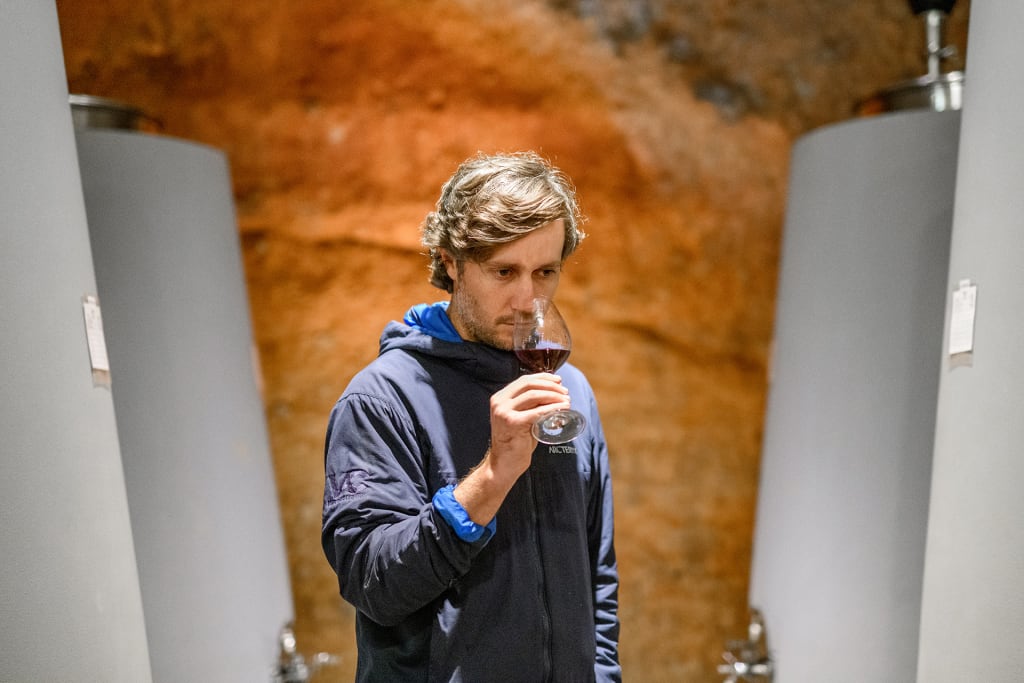
An additional consideration is long-term longevity. “Conventional farming has reduced the lifespan of a U.S. vineyard to around 30 years,” says Hamel Family Wines director of winegrowing John Hamel, who converted his family’s Sonoma vineyards to certified organic and biodynamic in 2015. “Yet across Sonoma and the North Coast, we see heritage vineyards planted in the late 1800s remain healthy and productive today.”
These ancient heritage vineyards were established before modern irrigation and chemical farming were even possible, Hamel notes.
They stand as a living testament to the long-term economic power of organic, holistic farming. And with climate change menacing seemingly every harvest, this style of farming also brings palpable short-term benefits that serve growers, vintners, and wine drinks alike.
More Wine Industry Coverage

In the Shop
For Wine On-the-Go
This versatile messenger-style wine bag comes with removable bottle liners, a corkscrew and an aerator.
Published: May 4, 2026
Like what you’re reading? Learn more about: