What the Latest Tariff News Means for Your Whiskey
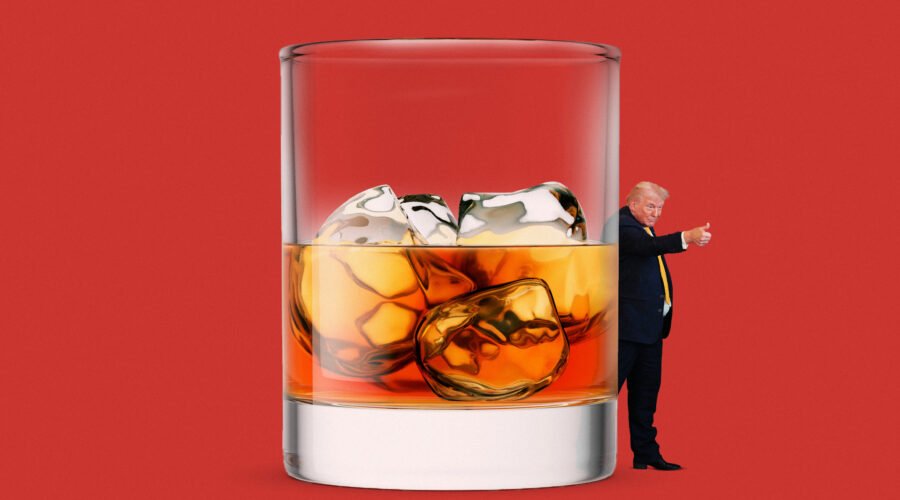
Finally, there’s some good news for whiskey lovers. A year after the United States imposed 10% tariffs on goods from the United Kingdom, President Trump announced on Truth Social that whiskey tariffs and restrictions between the U.K. and U.S. would be lifted.
The news was announced on April 30, after King Charles III and Queen Camilla of the United Kingdom departed after a four-day visit to the U.S., and just days before the Kentucky Derby.
U.S. trade representatives released a statement confirming that whiskey from the U.K.—including Scotch and some Irish whiskey from Northern Ireland—would get “preferential duty access” to the United States.
A Cause for Celebration
In general, this agreement likely means Americans will eventually see lower prices for Scotch and Irish whiskey, as well as wider access to various whiskey bottlings from both sides of the Atlantic.
“This is a real win on both sides, [in terms of] access and pricing,” says Blake Riber, founder of Seelbach’s, a Louisville, Kentucky-based retailer.
“The tariffs did exactly what you’d expect: they choked off demand,” Riber explains. “A bottle [of Scotch or Irish whisky] that used to sit comfortably on the shelf at $50 suddenly became a $60 to $65 decision. That kind of jump matters.”
And in a “crowded, competitive market,” it doesn’t take much for U.S. buyers to shift away from U.K.-made whiskey to something else, he adds.
Craft distillers on both sides of the pond are also celebrating.
“I’m certain many small distilleries here will look into their options for exporting to the U.K. especially as anti-competitive consolidation accelerates among wholesalers,” says Becky Harris, president and chief distiller at Catoctin Creek in Purcellville, Virginia.
“If companies have been absorbing these tariffs as opposed to passing them along to consumers, as many have been, it will be a step toward making them financially strong, even if consumers don’t see a change in the shelf prices,” she adds. “Making bulk whiskey more affordable may also spur innovation in both countries, allowing producers access to new stocks for blending and bottling.”
In other words, that might translate to more innovative whiskeys of a wide range of styles and origins on U.S. shelves.
While the tariff reduction was limited in scope, it raised hopes for broader tariff reductions down the road for wine and other spirits. It also raised hopes that tariffs might soon be eliminated across Europe, a key export market for U.S. wine and spirits producers.
Good News for Scotland Too
For Scotland distilleries, the news “should be very positive,” says Annabel Thomas, founder of Nc’nean Distillery, a Scotch whisky distillery.
“While the 10% tariffs have been in place, we and our importer have been absorbing those costs in order to keep our shelf price the same, which is a hit of about 5% to the top line for both parties,” Thomas explains. While the tariffs hadn’t changed the company’s export strategy—“Scotch is such a long lead time that changing something in reaction to tariffs would be short-sighted,” she says—it certainly helps in terms of keeping the flow of new bottlings coming to the U.S.
“The removal of those tariffs will give both us and our importer 5% back, which we plan to keep investing in the market,” Thomas adds.
Of note, exports of Scotch whisky to the U.S., the largest export destination for Scotch, had plunged 15% since the implementation of 10% tariffs in April 2025, the Scotch Whisky Association reported in February.
“This deal is a significant boost for the Scotch Whisky industry in our most valuable export market,” says Mark Kent, chief executive of the Scotch Whisky Association. “Distillers can breathe a little easier during a period of significant pressure on the sector.”
Similarly, Scotch distillers have long been the largest export market for Kentucky’s used bourbon barrels, notes Eric Gregory, president of the Kentucky Distillers’ Association.
U.S. law requires that bourbon is made using new oak; meanwhile, Scotch’s stringent requirements prohibit flavorings, and abundantly used bourbon barrels are a popular method to add natural flavor. Tariffs got in the way of this longstanding symbiotic—and lucrative—relationship.
With the tariffs removed, distilleries, retailers, and consumers take a step closer back to equilibrium, which might offset upward price pressure in whiskey bottlings, as well as in other spirits categories.
“Distillers can go back to the models they built. Consumers can go back to seeing bottles on shelves at the prices they were actually meant to be sold,” Riber says. “At the end of the day, that’s the outcome that matters. Better access, fairer pricing, and a category that feels competitive again.”
More Industry Coverage
In the Shop
For Wine On-the-Go
This versatile messenger-style wine bag comes with removable bottle liners, a corkscrew and an aerator.
Published: May 8, 2026