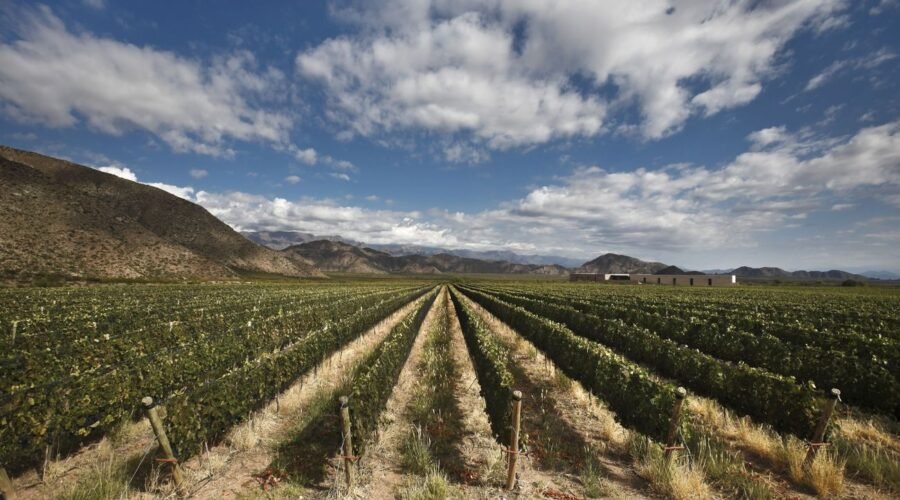
Expert’s Choice: Light South American reds
For many, ‘light South American reds’ will sound like an oxymoron. The continent is mostly associated with – and celebrated for – assertive reds with muscular tannins, plush fruit and considerable ageing potential.
And yet, the evolution and diversity of wines produced from red-skinned grapes across South America makes the case for looking beyond the lauded expressions of Malbec, Carmenère, Tannat and Cabernet Sauvignon.
While these have consolidated South America as a source of some of the world’s most exciting wines, the real excitement is perhaps elsewhere, in the rediscovery of grapes and terroirs that produce lighter shades of red.
Spoiled for choice
Tasting wines for this piece was an embarrassment of riches. We could easily have featured twice as many examples of equal quality and character.
To frame this selection I first had to answer the question my friend Nacho Campos (former sommelier extraordinaire now working for UK importer Les Caves de Pyrene) asked when I told him I was writing this piece: ‘But how light is a light red?’
The pursuit of levity, detail, purity and elegance – at the service of varietal and terroir expression – is now a major preoccupation among South American winemakers, reflected across their ranges, not least the Malbecs, Tannats and Cabernet Sauvignons.
But that would be another (interesting!) feature entirely.
Here we focus on truly light-bodied reds, not just a technical premise but also as an opportunity to emphasise the changing landscape (pun intended) of South American red wine production and its wider palette of red varieties.
Producers are rediscovering old vineyards and exploring their vines, engaging with the complex yet fascinating history of their countries and decolonising wine discourse – rightfully placing the local farming traditions of yore alongside the European-informed canon.
Refreshing complexity
(Image credit: Estanis Nunez)
Engaging with history in all its beautiful if troubled complexity has expanded South American producers’ wine lexicon and geographical reach – often to surprising extremes.
Featured here are wines from regions that range from the Atacama desert, in northern Chile, to the southern extremes of Patagonia by way of secluded corners of Mendoza (Lalande), San Juan (Calingasta) and the oceankissed Atlántida (Canelones, Uruguay).
Some of these wines do indeed have an aura of mysticism to them – evocative of a time lost and unburied.
This exploration of secluded terroirs goes hand in hand with the ongoing reappreciation of Criolla varieties (on whose revival Amanda Barnes MW reported for our September 2025 issue) and old vineyards bearing early plantings of European grapes that have since fallen into disfavour.
Did you know that there are centenary Cinsault vineyards growing on granite in Itata Valley?
Or that Garnacha can produce ethereal iterations of Mendoza?
That a spontaneous crossing of Muscat of Alexandria and Listán Prieto resulted in a variety called Moscatel Tinto?
Or that Bastardo/Trousseau has a long history in Argentine Patagonia? Now you do.
Fridge door-ready
How does this all translate into drinking pleasure? Very well indeed.
History and technicalities notwithstanding, the lighter reds of South America are straightforwardly fun and interesting – a perfect reflection of the winemaking community and ebullient wine scene of which they’re a product.
If you want proof of the continent’s technical evolution, spectacular creativity, inspiring confidence – and historical reckoning – look no further, one refreshing sip at a time.
Make space in the fridge!